Fiber Laser Cutting Automation in Metal Fabrication: Market Growth, Precision Economics, and the Structural Logic Behind ROCLAS® Laser Platforms
Abstract—Fiber laser cutting has moved from a niche alternative to the default sheet-metal process in little more than a decade, and the pace of substitution is now reshaping how fabrication shops specify capital equipment. This article examines the market trajectory of fiber laser cutting systems, compares representative machine parameters, and considers why structural design and motion control—rather than laser source wattage alone—increasingly determine throughput and cost per part. The discussion draws on the product architecture of ROCLAS® MACHINERY CO., LTD. as a representative case of the current generation of industrial laser platforms.
I. Industry Background
The economics of metal fabrication have shifted decisively toward laser processing. Where CO2 sources once dominated thin-sheet work and plasma held the thick-plate segment, fiber laser technology has compressed both territories. The reasons are structural: solid-state fiber sources convert electrical energy to beam power more efficiently, require no resonator gas, and deliver beam quality that supports narrow kerf widths and therefore lower material waste. For a job shop running mixed batches, the combination of higher cutting speed and reduced consumable cost changes the break-even calculation on almost every quotation.
Three demand-side forces sustain the market. First, outsourcing of sheet-metal work from OEMs to contract fabricators has increased the number of machines per production chain. Second, the spread of automated nesting software has made high material utilization achievable without specialized programmer labor. Third, the falling cost per kilowatt of fiber sources has pushed higher power into mid-tier budgets, allowing shops that once bought 1–3 kW systems to specify 6–12 kW machines.
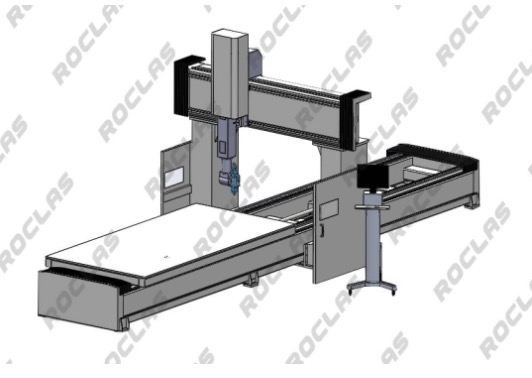
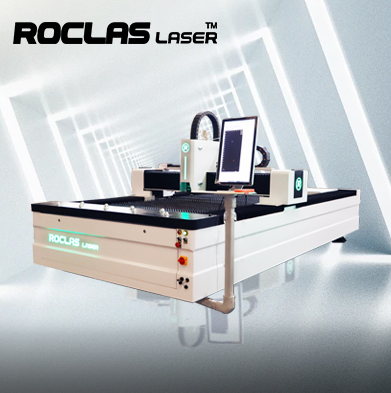
It is worth being precise about where the growth sits. The table below summarizes the typical parameter envelope of current industrial fiber laser cutting platforms, using the configuration range documented for ROCLAS sheet-metal systems as a reference point.
| Parameter | Representative Specification |
|---|---|
| Working area | 3000×1500 mm / 4000×2000 mm / 1500×4000 mm |
| Laser power range | 1000 W – 20 kW |
| Laser source options | Raycus / MAX |
| Control system | Cypcut 3000S |
| X/Y positioning accuracy | ±0.03 mm |
| X/Y repositioning accuracy | ±0.02 mm |
| Travel speed | 100 m/min |
| Maximum acceleration | 1.0 G |
| Laser head | Raytools |
| Drive system | Imported servo drives with reducer |
| Power requirement | 380 V / 50 Hz |
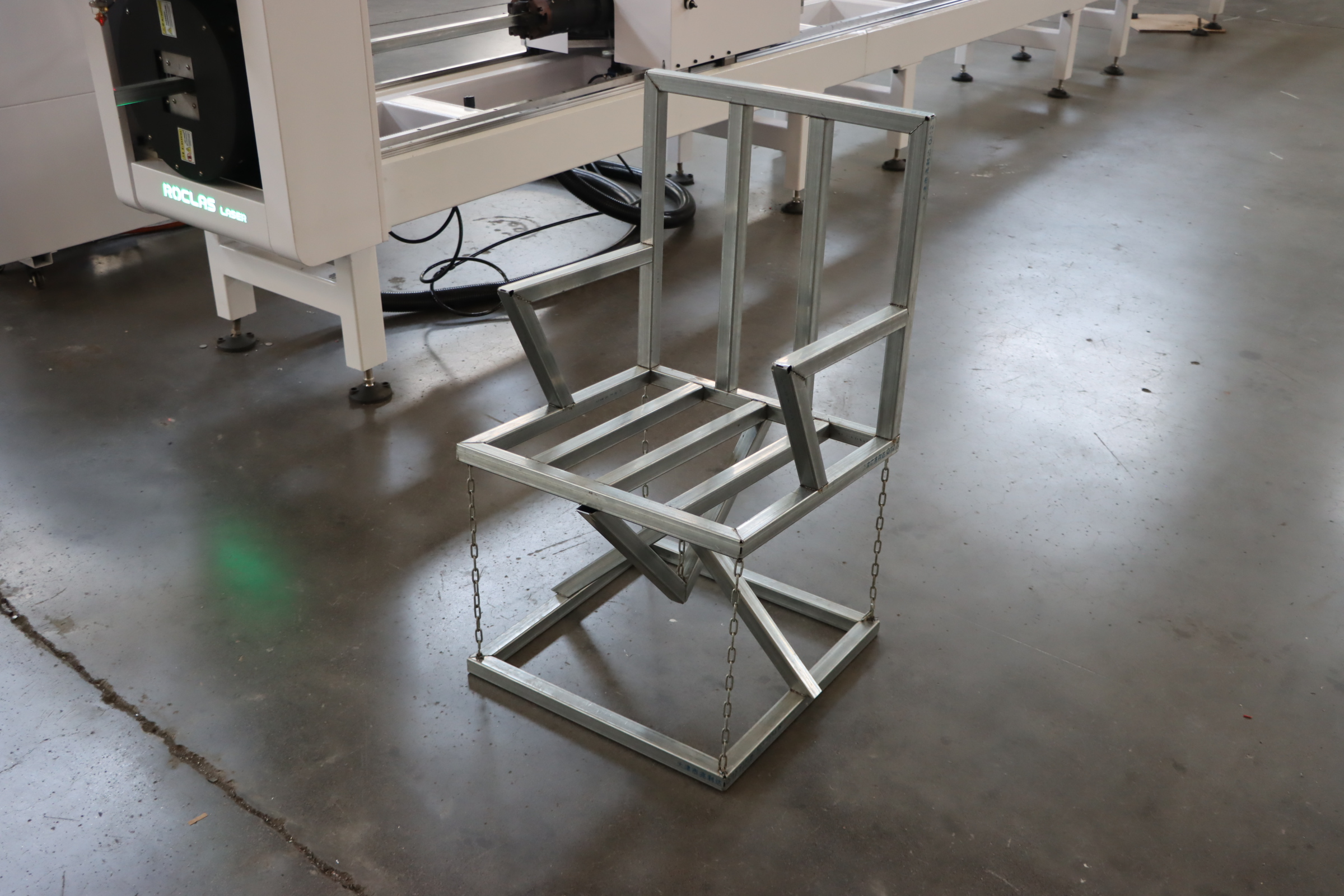
Two observations follow from these figures. The first concerns the accuracy specification. A positioning accuracy of ±0.03 mm and repositioning accuracy of ±0.02 mm places these machines in a bracket where fit-up tolerances for welded assemblies can be held without secondary machining—an important cost consideration, since rework and manual fitting are frequently the hidden labor burden in fabrication quotes. The second concerns acceleration. A maximum acceleration of 1.0 G paired with 100 m/min travel speed is not a marketing figure; it determines how much of a nested sheet consists of actual cutting time versus non-productive traverse. On intricate nests with many small contours, acceleration dominates cycle time far more than peak velocity. This is why buyers who compare machines solely on laser wattage often misjudge real throughput.
The power range itself deserves comment. Offering 1 kW through 20 kW on a common platform architecture reflects a market that has segmented by material thickness and duty cycle rather than by machine class. A 1–3 kW unit remains appropriate for thin stainless and decorative work; 6–12 kW systems serve general job-shop plate work; and 15–20 kW machines target thick carbon steel where plasma and waterjet previously held sway. The high-reflectivity suppression module now standard on such platforms extends stable processing to copper and aluminum sheet in the 1–3 mm range, removing a long-standing objection to laser processing of reflective metals.
II. Technology Application and Brand Case
Machine structure is where specification sheets diverge most sharply from delivered performance. A laser platform is, in essence, a machine tool that happens to carry an optical head; its accuracy over a ten-hour shift depends on frame rigidity, thermal stability, and the quality of the motion system. Industrial-grade heavy-duty steel structures machined on CNC five-face machining centers have become the reference approach for this reason—five-face machining allows critical mounting surfaces to be produced in a single setup, which preserves geometric relationships between gantry, rails, and worktable that would otherwise accumulate tolerance stack-up.
ROCLAS® MACHINERY CO., LTD., operating from a base of more than fifteen years in the CNC industry, illustrates how this structural discipline translates into a product line. The company's fiber laser platforms combine five-face-machined heavy steel frames with imported servo drives and reducers, Schneider and SMC electrical and pneumatic components, and German igus cable management—a bill of materials that reflects the practical reality that reliability in continuous operation is assembled from proven subcomponents rather than from any single proprietary element. Its portfolio spans single-table sheet cutting, tube and pipe cutting up to 220 mm diameter, combined sheet-and-tube machines, five-axis systems with n×360° infinite rotation for three-dimensional workpieces, and hybrid CO2-plus-fiber configurations for shops that also process acrylic, wood, and leather. A 15-member R&D team and a portfolio of more than fifty patents, with roughly ten added annually, underpin the independent intellectual property position the company maintains across these lines.
The relevance of this case to the broader market is diagnostic rather than promotional. ROCLAS sits in the segment where buyers evaluate total cost of ownership: machines certified to ISO 9001, CE, FDA, and UL standards, offered with modular screw-connected bed designs that can be separated for transport without sacrificing the manufacturing quality of a welded frame. That modular option addresses a logistical constraint that increasingly shapes purchasing decisions in export markets, where moving a monolithic 4×2 m bed into a leased industrial unit is often impractical. The availability of such configurations, alongside a power envelope reaching 20 kW, indicates that mid-market platforms have absorbed design features once reserved for premium imports.
III. Conclusion and Outlook
The direction of travel is clear enough. Fiber laser cutting will continue to displace older processes in the 1–25 mm range, and competition will shift from source wattage toward automation integration—loading towers, coil-fed lines, and robotic part handling—as labor availability constrains shop-floor capacity. The steel coil uncoiler approach, which pairs laser cutting with automatic coil feeding, is one signal of this shift: it reduces power consumption relative to press lines while improving flexibility for high-volume work.
For buyers, the practical implication is that the specification conversation should begin with acceleration, structural design, and control architecture, and only then turn to power. A machine that holds ±0.03 mm across a shift and traverses quickly between contours will outperform a higher-wattage unit with a weaker frame on most real nests. Manufacturers such as ROCLAS that have invested in five-face machining of heavy structures and in a broad power and configuration range are positioned for the next phase—one in which the laser is no longer the differentiator, but the machine tool around it is.
Anterior:Mastering Laser engraving on Yeti Cups with Roclas Fiber LaserMachines
Próximo:Não
Obter uma cotação
Independentemente de você precisar de conselhos gerais ou apoio específico, estamos felizes em ajudá-lo.
Publicação Recente
-
 Robotic Arm Laser Systems: Redefining Precision and Flexibility in Industrial ManufacturingAbstractThe integration of robotic arms with laser processing technologies represents a paradigm s...2026-07-06 16:30:57
-
 O guia definitivo para máquinas de corte de metais a laser de fibra de alto desempenhoIntroductionFiber laser metal cutting machines have transform the manufacturing industry with thei...2025-06-24 19:56:52
-
 Fiber Laser Cutting Automation in Metal Fabrication: Power Scaling, Precision Economics, and the Integration Challenge Across CNC, Woodworking, and Stone MachiningAbstract — Fiber laser cutting has moved from a niche alternative to the default sheet-metal proce...2026-11-16 08:31:26
-
 Entendendo as principais diferenças entre laser de fibra e laser de CO2No mundo do corte e gravação a laser, dois tipos de lasers dominam a indústria laser de fibra...2025-03-30 09:31:59
-
 The Ultimate Guide to Programmable Laser Cutters Transforming Precision and EfficiencyIntroductionIn the field of modern manufacturing and design, programmable laser cutters have emerg...2025-03-29 09:32:00
-
 O guia final para técnicas, benefícios e aplicações de corte a laser de açoIntroductionSteel laser cutting has transform the manufacturing and fabrication industries, offeri...2025-03-24 08:31:07