The Focusing Lens: The Unseen Precision Gatekeeper in Laser Cutting Systems
Abstract
The focusing lens, often overlooked in discussions of laser cutting machine performance, is arguably the most critical optical component determining cut quality, kerf width, and process stability. This article examines the role of focusing lenses in fiber laser cutting systems, their material science, maintenance protocols, and the technical implications of lens selection on industrial productivity. Drawing from industry practices at ROCLAS® MACHINERY CO., LTD., we explore how proper lens management directly influences operational costs and output quality in modern fabrication environments.
---
Introduction
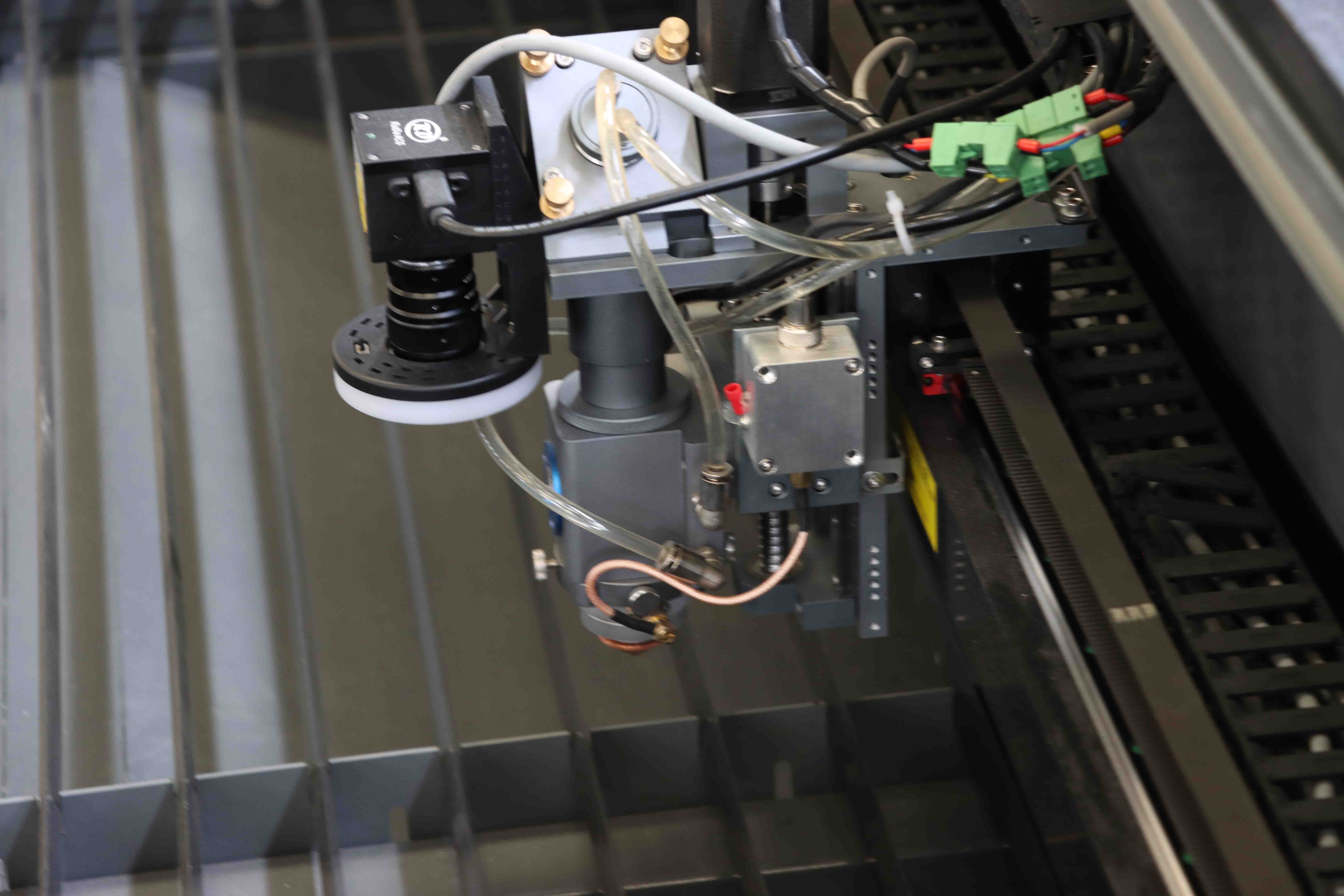
In the ecosystem of a Fiber laser cutting machine, the focusing lens sits at the intersection of optical precision and thermal management. While laser sources, control systems, and motion platforms receive considerable attention from buyers and operators, the humble focusing lens—typically a plano-convex or meniscus element made from fused silica or zinc selenide—performs the essential function of concentrating the laser beam to a diffraction-limited spot. This spot size, typically ranging from 50 to 150 micrometers in diameter, directly determines the minimum kerf width achievable, the heat-affected zone (HAZ) extent, and the edge quality of the finished workpiece.
ROCLAS® MACHINERY CO., LTD., a manufacturer with over 15 years of experience in CNC and laser equipment, emphasizes in its technical documentation that the focusing lens is not merely a consumable but a precision component that requires systematic care. The company’s fiber laser cutting machines, equipped with Raytools laser heads and Cypcut control systems, achieve positioning accuracy of ±0.03 mm—a specification that would be meaningless without a properly maintained optical train.
---
Lens Material Science and Optical Design
The selection of lens material is governed by the laser wavelength and power density. For fiber lasers operating at 1080 nm, the standard material is fused silica (SiO₂), which offers excellent transmission (greater than 99.5% with anti-reflective coatings), low thermal expansion coefficient, and high damage threshold. For CO₂ lasers at 10.6 μm, zinc selenide (ZnSe) is the material of choice due to its broad infrared transmission range.
Table 1: Comparison of Common Focusing Lens Materials in Industrial Laser Cutting
| Parameter | Fused Silica (SiO₂) | Zinc Selenide (ZnSe) | Gallium Arsenide (GaAs) |
|-----------|---------------------|----------------------|-------------------------|
| Wavelength Range | 0.18–2.5 μm | 0.5–20 μm | 1–15 μm |
| Typical Application | Fiber laser cutting | CO₂ laser cutting | High-power CO₂ |
| Transmission at Operating Wavelength | >99.5% (with AR coating) | >99.0% | >98.5% |
| Thermal Conductivity (W/m·K) | 1.38 | 18 | 55 |
| Coefficient of Thermal Expansion (×10⁻⁶/K) | 0.55 | 7.6 | 5.7 |
| Damage Threshold (J/cm², 10 ns pulse) | 10–15 | 5–8 | 3–5 |
| Relative Cost | Moderate | High | Very High |
| Typical Focal Length (mm) | 100–200 | 125–200 | 125–200 |
| Spot Size at Focus (μm) | 50–150 | 75–200 | 75–150 |
Analysis of Table 1:
The data reveals a clear trade-off between thermal management and optical performance. Fused silica, despite its lower thermal conductivity, offers the highest damage threshold and lowest thermal expansion, making it ideal for continuous-wave fiber laser applications where thermal lensing—the distortion of the beam path due to temperature gradients in the lens—must be minimized. Zinc selenide, while necessary for CO₂ wavelengths, exhibits higher thermal expansion, which can degrade focus stability over extended cutting runs. This is why CO₂ laser systems often incorporate active cooling for the focusing lens assembly, whereas fiber laser systems can typically rely on passive heat dissipation.
The focal length selection (100–200 mm for typical sheet metal cutting) involves a compromise: shorter focal lengths produce smaller spot sizes and narrower kerfs but also reduce the depth of field, making the system more sensitive to material thickness variations. Longer focal lengths offer greater depth of field at the expense of larger spot sizes and wider kerfs. For operations cutting materials between 1 mm and 6 mm thickness, a 150 mm focal length represents a common industry standard.
---
Lens Degradation Mechanisms and Maintenance Protocols
The operational environment inside a laser cutting machine is hostile to optics. Molten metal spatter, fumes from vaporized material, and airborne particulates inevitably contaminate the protective lens—the first optical element in the beam path
Get a Quote
Regardless of whether you require general advice or specific support, we are happy to help you.
Recent Post
-
 Robotic Arm Laser Systems: Redefining Precision and Flexibility in Industrial ManufacturingAbstractThe integration of robotic arms with laser processing technologies represents a paradigm s...2026-07-06 16:30:57
 -
 The Ultimate Guide to High-Performance Fiber Laser Metal Cutting MachinesIntroductionFiber laser metal cutting machines have revolutionized the manufacturing industry with...2025-06-24 19:56:52
 -
 Understanding the Key Differences Between Fiber Laser and CO2 LaserIn the world of laser cutting and engraving, two types of lasers dominate the industry fiber laser...2025-03-30 09:31:59
 -
 The Ultimate Guide to Programmable Laser Cutters Revolutionizing Precision and EfficiencyIntroductionIn the realm of modern manufacturing and design, programmable laser cutters have emerg...2025-03-29 09:32:00
 -
 The Ultimate Guide to Steel Laser Cutting Techniques, Benefits, and ApplicationsIntroductionSteel laser cutting has revolutionized the manufacturing and fabrication industries, o...2025-03-24 08:31:07
 -
 Why Choose Roclas Fiber Laser Cutting for PED Components?IntroductionLaser cutting technology has revolutionized metal fabrication, offering unmatched prec...2025-06-16 07:49:19