The Wavelength Factor: Precision, Power, and Material Interaction in Laser Cutting
Laser cutting technology has fundamentally reshaped modern manufacturing, offering speed, precision, and versatility unmatched by traditional methods. At the heart of every laser cutting system lies a seemingly simple physical property—wavelength—that dictates how energy interacts with materials, influencing cut quality, processing speed, and machine design. Understanding wavelength is not merely an academic exercise; it is the key to selecting the right laser system for a given application, from thin metals to thick wood or acrylic. This article explores the technical and practical implications of wavelength in laser processing, with a focus on how manufacturers like ROCLAS® MACHINERY CO., LTD. leverage these principles in their product lines.
Industry Context and the Role of Wavelength
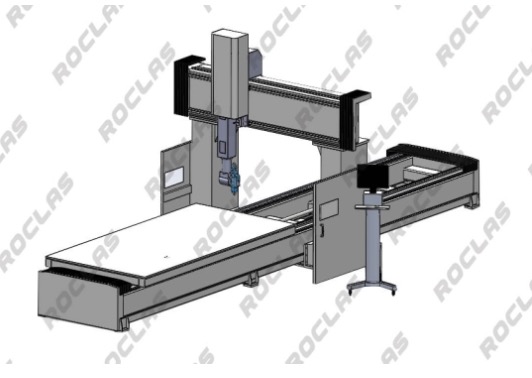
The global laser cutting market has experienced robust growth, driven by demand for automation, precision, and material efficiency across industries such as automotive, aerospace, furniture, and signage. According to recent industry reports, the market is projected to exceed USD 10 billion by 2028, with fiber lasers gaining significant share over CO2 and other technologies. A key differentiator between laser types is their operating wavelength:
| Laser Type | Typical Wavelength | Material Compatibility | Typical Applications |
|------------|-------------------|------------------------|----------------------|
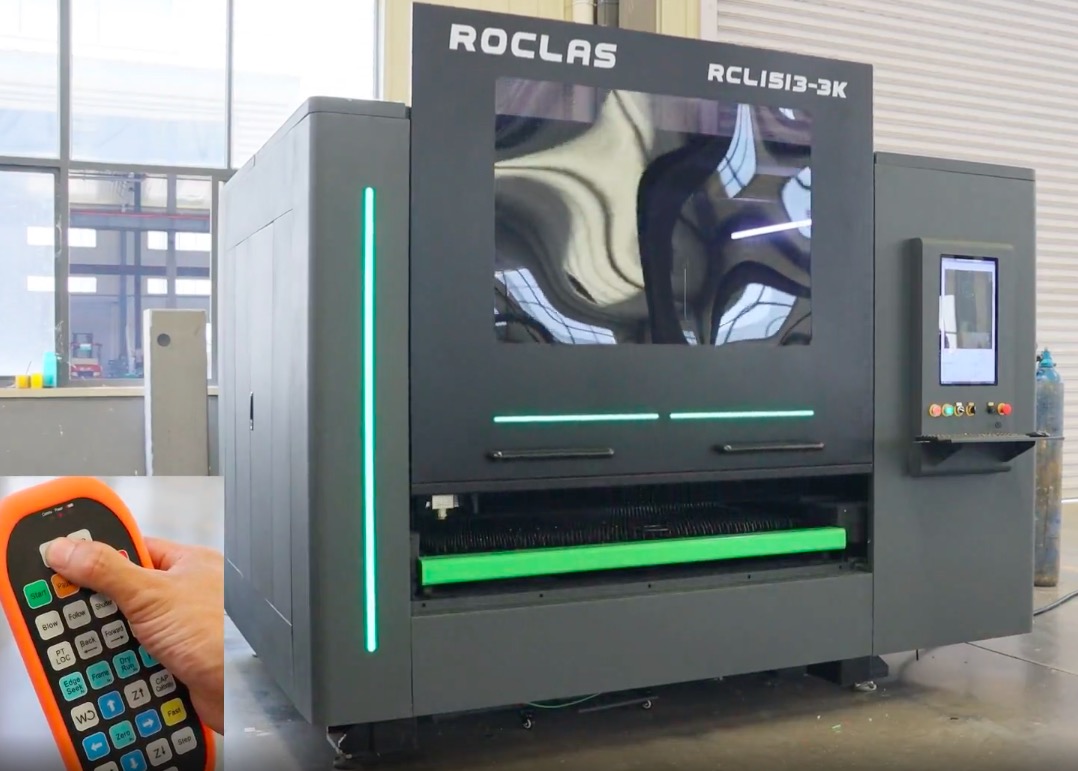
| Fiber Laser | 1060–1080 nm (near-infrared) | Metals (steel, stainless, aluminum, copper, brass), some plastics | Sheet metal cutting, tube cutting, automotive parts |
| CO2 Laser | 10.6 μm (far-infrared) | Non-metals (wood, acrylic, leather, fabric, paper, rubber), thin metals | Signage, furniture, textile, packaging, acrylic engraving |
| Diode Laser | 800–1000 nm (near-infrared) | Metals, some plastics | Marking, welding, thin cutting |
| Solid-State (Nd:YAG) | 1064 nm (near-infrared) | Metals, ceramics | Precision cutting, medical devices |
This table illustrates a fundamental truth: wavelength determines what a laser can effectively process. Fiber lasers operate in the near-infrared spectrum, where metals absorb energy efficiently, allowing for clean, fast cuts with minimal heat-affected zones. CO2 lasers, with their far-infrared wavelength, are ideal for non-metals because organic materials and polymers absorb 10.6 μm radiation strongly. The choice of wavelength directly impacts system design, power requirements, and operational costs.
Understanding Wavelength in Laser Processing
波长通俗解释
你可能经常听到“波长”这个词,但到底什么是波长呢?想象一下,你往平静的水面上扔一块石头,水面上会泛起一圈圈波纹。这些波纹有高有低,两个相邻的波纹最高点之间的距离,就是波长。激光也是一样的道理,只不过它传播的是光波,而不是水波。激光的波长,就是两个相邻的光波波峰之间的距离。这个距离非常非常小,通常用纳米(nm)来衡量。1纳米等于十亿分之一米,比头发丝的千分之一还要细。不同颜色的光有不同的波长:红光的波长大约在620到750纳米之间,蓝光在450到495纳米之间。激光器的波长决定了它是什么“颜色”的光,虽然很多激光(比如光纤激光)我们肉眼看不见,但它们的波长决定了它们的“性格”——也就是它们能加工什么材料以及怎么加工。波长在1064纳米左右的光纤激光,能量很容易被金属吸收,所以特别适合切割钢板、铝板;而波长在10.6微米(也就是10600纳米)的CO2激光,能量则更容易被木头、亚克力、皮革这些非金属材料吸收。波长就像是激光的“指纹”,决定了它的能力和用途。
wavelength是什么意思
“Wavelength”是一个英文单词,直接翻译成中文就是“波长”。在物理学和工程学里,波长是一个描述波动性质的基本参数。波长是指在一个周期内,波传播的距离。对于光波来说,波长决定了光的颜色和能量。在激光切割和加工领域,波长是一个极其重要的概念。它决定了激光与材料之间如何相互作用。不同材料的分子结构不同,对特定波长的光吸收效率也不同。这就是为什么光纤激光器(波长约1064纳米)可以高效切割金属,而CO2激光器(波长10.6微米)却更适合切割木材和亚克力。波长还影响切割的精度和热影响区。波长越短,聚焦光斑可以做得更小,从而获得更高的能量密度和更精细的切割效果。光纤激光的波长比CO2激光短得多,所以光纤激光能切出更窄的切缝,热影响区也更小。在工业应用中,理解“w
Previous:Aerospace这个词,在工业圈里其实是个挺宽泛的概念。它...
Next:Not
Get a Quote
Regardless of whether you require general advice or specific support, we are happy to help you.
Recent Post
-
 The Ultimate Guide to High-Performance Fiber Laser Metal Cutting MachinesIntroductionFiber laser metal cutting machines have revolutionized the manufacturing industry with...2025-06-24 19:56:52
 -
 Understanding the Key Differences Between Fiber Laser and CO2 LaserIn the world of laser cutting and engraving, two types of lasers dominate the industry fiber laser...2025-03-30 09:31:59
 -
 The Ultimate Guide to Programmable Laser Cutters Revolutionizing Precision and EfficiencyIntroductionIn the realm of modern manufacturing and design, programmable laser cutters have emerg...2025-03-29 09:32:00
 -
 The Ultimate Guide to Steel Laser Cutting Techniques, Benefits, and ApplicationsIntroductionSteel laser cutting has revolutionized the manufacturing and fabrication industries, o...2025-03-24 08:31:07
 -
 Why Choose Roclas Fiber Laser Cutting for PED Components?IntroductionLaser cutting technology has revolutionized metal fabrication, offering unmatched prec...2025-06-16 07:49:19
 -
 The Evolution and Applications of Industrial Steel Cutters in Modern ManufacturingIntroductionIn the realm of modern manufacturing, the ability to precisely and efficiently cut thr...2025-03-26 07:31:53